The Toronto Raptors opened the post-All-Star break stretch with back-to-back wins, defeating the Bulls and the Bucks while showing signs of improved stability and offensive rhythm. With the roster largely healthy, these two games offered one of the clearest pictures yet of how Toronto may look heading into the final portion of the season. Even with lineup changes between the two matchups — including Scottie Barnes playing the first game but missing the second for personal reasons — the Raptors showed depth, scoring balance, and defensive structure that had been harder to evaluate earlier in the year.
The Toronto Raptors Start Strong After The All-Star Break
Balanced Scoring Holds Without Barnes
Toronto’s second game after the break provided an important test when Barnes was unavailable. Rather than struggling offensively, the team leaned on Immanuel Quickley and Brandon Ingram to carry the scoring load.
Quickley led the way with 32 points, controlling the pace and creating offense both in transition and in half-court situations. He consistently pressured the defense off the dribble and helped keep possessions organized when Milwaukee tightened coverage.
Ingram added 22 points, once again showing how valuable his shot creation can be. His ability to generate clean looks late in possessions and operate comfortably in the mid-range helped Toronto maintain offensive flow throughout the game.
The performance reinforced a key takeaway: Toronto no longer depends on a single initiator to sustain offense. Multiple players can step into primary roles depending on availability and matchups.
Healthier Rotation Brings Clearer Structure
One of the biggest positives from the two games was simply roster availability. With most of the rotation healthy, Toronto could rely on more natural positional roles rather than patchwork lineups.
That stability showed in several ways:
- Defensive assignments looked more consistent
- Transition spacing improved
- Bench minutes felt more defined
- Half-court sets developed with better timing
When the Raptors avoid major injury absences, their identity becomes clearer. The team plays faster, rotates more confidently on defense, and generates more reliable offensive possessions.
First Game Vs Bulls Set The Tone
The win over Chicago helped establish momentum immediately after the break. With Barnes active in that matchup, Toronto showed its preferred structure: defensive versatility, rebounding balance, and multiple ball-handling options initiating offense.
That game highlighted how Barnes connects the lineup. His defensive switching, rebounding, and ability to push the ball in transition help Toronto play at its intended pace. The performance served as a reminder that when he is available, the Raptors’ overall ceiling rises on both ends of the floor.
Win Over Bucks Showed Depth And Adaptability
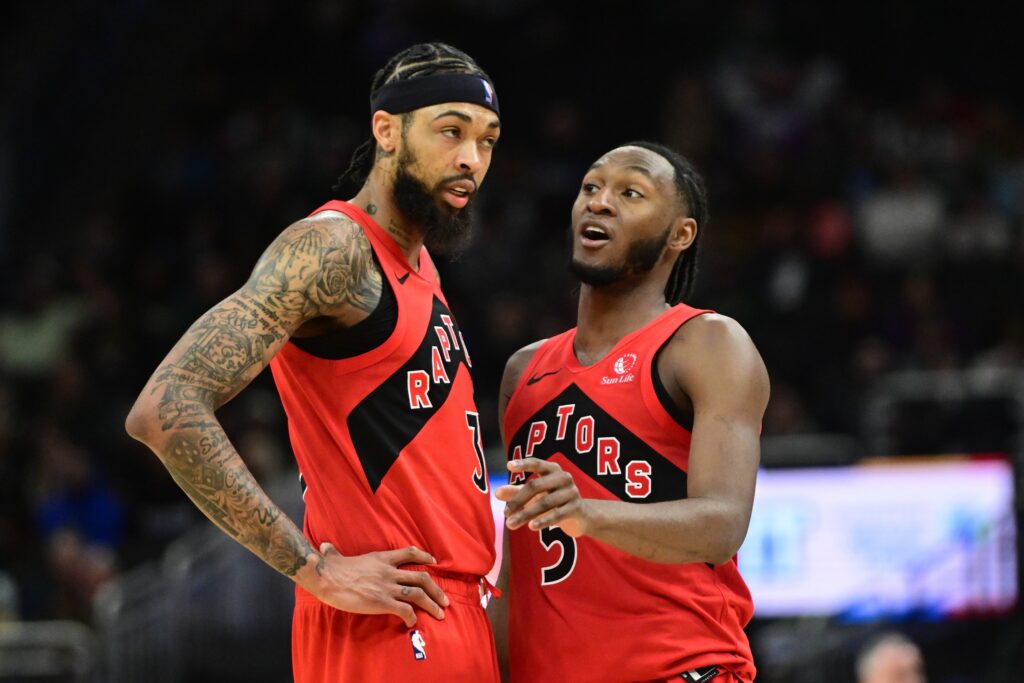
The victory over Milwaukee may have been even more revealing. Playing without Barnes, Toronto still controlled long stretches through guard play, spacing, and disciplined defensive rotations.
The Raptors avoided relying solely on isolation scoring. Instead, they generated offense through movement, quick decisions, and transition opportunities. That adaptability matters late in the season, when schedule congestion and minor absences often force teams to adjust quickly.
Winning in different lineup conditions suggests Toronto’s progress is not tied to a single configuration. That flexibility could become a major advantage during the playoff push.
What These Two Games Mean Moving Forward
Two games do not define a season, but they can reveal trends. Toronto’s post-break stretch has already shown three encouraging signs:
- The roster is close to full health
- Multiple players can carry scoring responsibility
- The team can win with different lineup structures
If those patterns continue, the Raptors should enter the final stretch with more stability than they had earlier in the year. Maintaining health and offensive balance will likely determine whether this strong start after the break becomes a turning point or simply a short surge.
Featured Image: Benny Sieu-Imagn Images